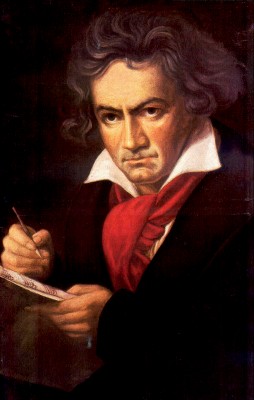
 Rehearsals for Beethoven's 9th have begun! At rehearsal our director asked for a show hands to find out who had never sung the Ninth and my hand few up: This is why I joined the symphony chorus this fall.
Of course, I'm excited also about the Chichester Psalms which is coming up soon, but everything is eclipsed by Beethoven right now. The sighs of "finally" when we put away the Bernstein and took out the Beethoven escaped out of every section in the choir. (There are always humorous moments, created specifically by conductors to get reactions from the choir, but this audible mix of relief and excitement made me want to giggle.)
Beethoven, however, is always a serious matter, or so we've been taught. He is myth and genius, not mortal and we still live in his shadow today. This is the dude that even non-classical fans want to buy symphony tickets to hear.
An interesting, but unsuccessful, challenge to this "Beethoven-genius-legend" has been released in the new film Copying Beethoven. Staring Ed Harris as Beethoven and Dianne Kruger as a copyist named Anna Holtz, a new myth is told. You may be saying to yourself, "A girl copyist?" Yes, a girl who was raised by nuns, and therefore educated, was sent to be Beethoven's copyist. Even more, she makes "corrections" to his score and ultimately aids him in conducting his Ninth. "Scandalous!" you may say. Actually, it's just awkward and funny - funny if you actually know Beethoven's biography, that is. The worst is when Beethoven keeps yelling at people to speak louder. Obviously, the writers and director must have wanted partially-deaf Beethoven so that he could carry out the uncomfortably weird relationship he had with his female co-star. In short: do not waste your time, let alone your money, on this one; even Immortal Beloved is better than this, and that's not saying much.
But back to choir: there are many composer bio-flicks and movies about bands, but I have not run across many about choirs. There's the Sister Act movies. What else - give me some ideas, please!